If historians ever write about 2025, they probably will not start with politics or world events. They will start with a simple sentence.
“Everyone needed more RAM.”
The Great RAM panic of 2025 #
At some point early in the year, people realized that 16 GB of RAM was no longer “plenty.” It was barely polite. Open a browser, an IDE, a design tool, an AI assistant, and maybe a video call, and suddenly your laptop fan sounded like it was preparing for takeoff.
By mid 2025, buying a new machine without 32 GB felt irresponsible. Buying one with 64 GB felt aspirational. Buying one with 128 GB felt like a personality trait.
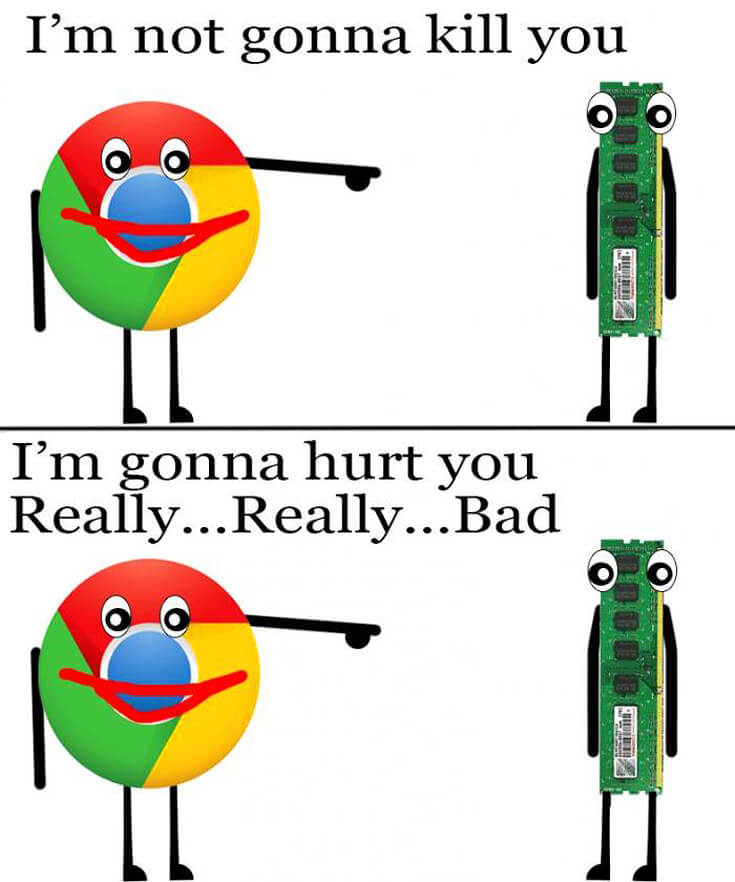
Cloud providers smiled quietly as memory prices crept up. Local machines cried quietly as swap files took over entire SSDs. Somewhere, a Chrome tab was still open, consuming 4 GB by itself and refusing to explain why.
AI Everywhere, All at Once #
If 2024 was about discovering AI, 2025 was about being unable to avoid it.
AI wrote code, reviewed code, argued with your code, and politely suggested a “more optimal solution” that rewrote your entire project. Designers used AI to generate concepts, variations, icons, illustrations, and sometimes an existential crisis.
Productivity tools became AI tools first and products second. Every app had a button that said “Ask AI,” even when no one was sure what question it was supposed to answer.
The most impressive part was not that AI got smarter. It was that it got confident. Sometimes too confident. Nothing quite matched the experience of an AI insisting that a function existed when it absolutely did not.
Video Generation Went From Gimmick to “Wait, What?” #
Then came the videos.
Early in the year, AI video generation was still a novelty. A bit glitchy. A bit uncanny. By the end of 2025, it was unsettlingly good. People typed prompts and watched short films appear. Lighting made sense. Camera movement felt intentional. Faces stopped melting most of the time.
Suddenly, marketing teams needed fewer stock clips. Creators experimented with AI storyboards. Indie filmmakers used AI to prototype scenes that would have cost thousands just months earlier.
At the same time, everyone collectively agreed to double-check whether any video they saw online was real. Trust issues became a shared cultural experience.
GPUs Became the New Gold #
If RAM was scarce, GPUs were mythical.
Entire buying guides were written around a single question. “Can it run local models?” Developers became amateur hardware analysts overnight. Terms like VRAM, tensor cores, and inference speed entered casual conversation.
Running AI locally felt empowering, expensive, and slightly rebellious. It also made laptops very warm. More than one person learned exactly where their device vents were located the hard way.
Gaming in 2025: Can It Run It Though? #
Gaming did not escape the chaos. In fact, it embraced it and demanded even more.
Modern games in 2025 looked incredible. Ray tracing everywhere. Near cinematic lighting. Massive open worlds filled with systems, simulations, and NPCs that apparently all needed to think at the same time.
The problem was the spec sheet.
Recommended requirements started to look like polite suggestions for a small data center. GPUs with massive VRAM, CPUs with more cores than most people could name, and yes, more RAM. Always more RAM.
Gamers found themselves in a strange loop. Upgrade the GPU, then realize the CPU was the bottleneck. Upgrade the CPU, then realize the power supply was crying. Upgrade everything, then discover the game needed a patch anyway.
Maintaining a modern gaming setup became less about fun and more about logistics. Thermal management, driver updates, storage juggling, and constant performance tuning became part of the hobby. Some people spent more time benchmarking than actually playing. I personally now avoid looking at what Nvidia is releasing every other week because either I won’t be able to afford it or it will be out of stock from the start. Don’t get me started on Steam box.
Cloud gaming promised relief, but latency, subscriptions, and region issues kept it from being the universal solution. For many, the future of gaming felt powerful, exciting, and slightly exhausting.
Looking Back #
When we look back at 2025, it will feel like a turning point. Not because everything changed overnight, but because expectations shifted.
More memory became normal. AI became infrastructure. Video generation became a tool, not a trick. Gaming became more spectacular and harder to sustain.
And everyone learned to ask one crucial question before clicking “Install,” “Run,” or “Play.”
“How much RAM does this need?”
And the answer, almost always, was “More than you have.”